The Jewish Quarter
The Jewish Quarter
– A story of history and cultural diversity –
– A story of history and cultural diversity –
Explore the streets around the Great Synagogue, the area known in the interwar period as the Jewish Quarter, a place of confluence of Ottoman, Greek and Jewish cultures, which defined the multi-ethnic character of the port city of Constanța and impressed a spirit open to harmonious coexistence, and allowed the presence and good neighborhood of buildings with architectural-urban characteristics specific to each ethnic group.
At the beginning of the 20th century, Constanta had a population of approximately 13,400 people - Romanians, Turks, Tatars, Greeks, Austro-Hungarians, Jews, Bulgarians, Germans, English, French, Russians, Swiss, Persians and Americans, of various denominations: Orthodox, Muslim, Grigo-Roman Catholic, Israeli, Catholic, Protestant, Lutheran - recorded in the "Census of the population of the city of Constanța" carried out in December 1902.
CA Rosetti Street is mentioned in 1884 as Sinagogii Street, at the intersection with Comercial Street (currently Petru Rareș Street), where there is an old synagogue built after 1867, built with the approval of the Ottomans - Sultan Abdul Aziz's firman.
Explore the streets around the Great Synagogue, an area known in the interwar period as the Jewish Neighborhood, a place of confluence of Ottoman, Greek, Jewish cultures, which defined the multi-ethnic character of the port city of Constanța and impressed a spirit open to harmonious coexistence, and allowed the presence and good neighborhood of buildings with architectural-urban characteristics specific to each ethnic group.
At the beginning of the 20th century, Constanta had a population of approximately 13,400 people - Romanians, Turks, Tatars, Greeks, Austro-Hungarians, Jews, Bulgarians, Germans, English, French, Russians, Swiss, Persians and Americans, of various denominations: Orthodox, Muslim, Grigo-Roman Catholic, Israeli, Catholic, Protestant, Lutheran - recorded in the "Census of the population of the city of Constanța" carried out in December 1902.
CA Rosetti Street is mentioned in 1884 as Sinagogii Street, at the intersection with Comercial Street (currently Petru Rareș Street), where there is an old synagogue built after 1867, built with the approval of the Ottomans - Sultan Abdul Aziz's firman.
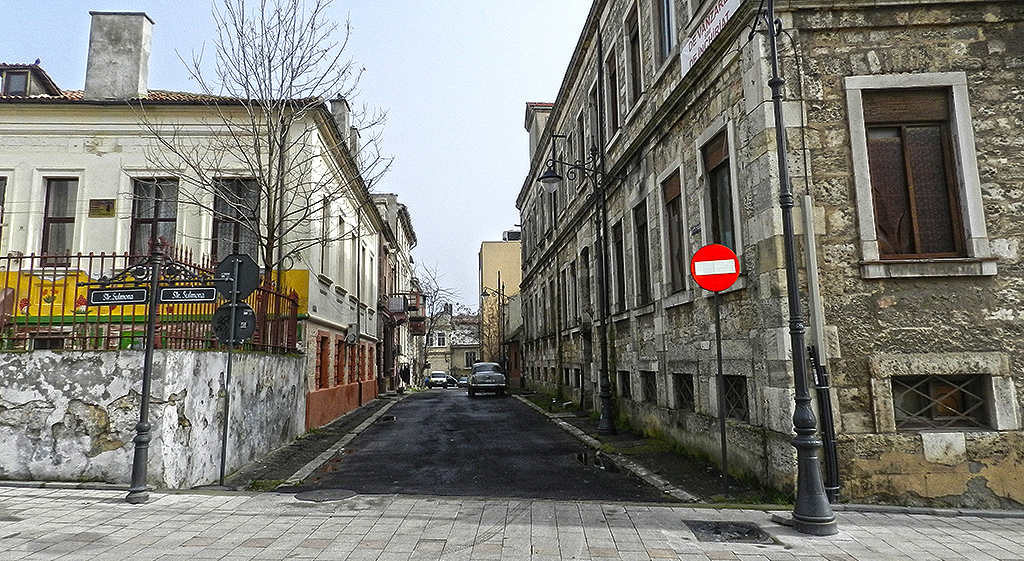
Since 1880, French citizens have been making real estate investments in the central area of Constanța. In 1881, Jean Gerard A. Alléon buys the Gambetta Hotel (demolished in 1913) and all the land bounded today by Traian Street, V. Canarache (unmarked at the time), Petru Rareș (former Comercială Street) and Sulmona (former Tomis Street).
In 1884, when Sinagogii Street was paved, the local artery connecting Comercială Street (currently Petru Rareș Street) and Tomis (Sulmona Street), its name was changed to Alléon Street (currently CA Rosetti).
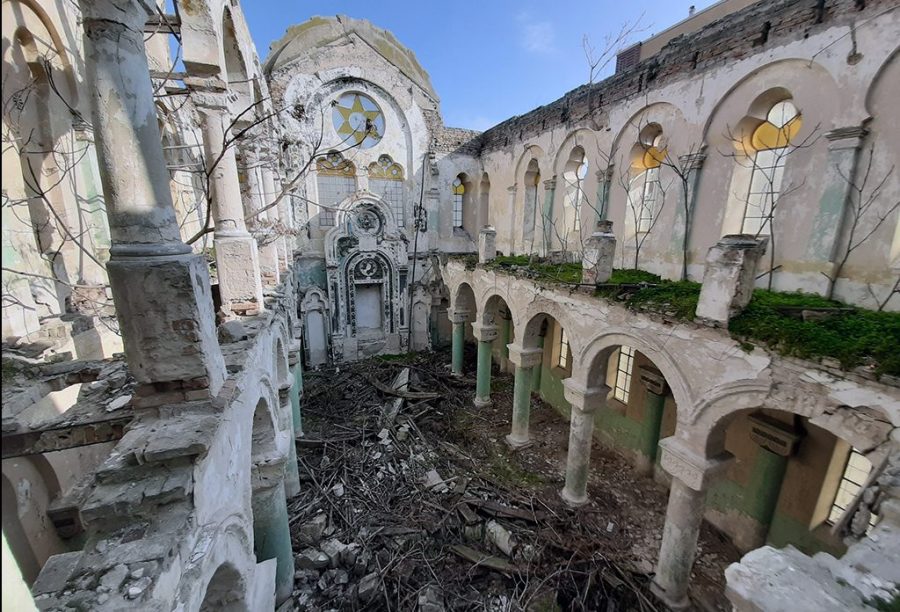
The construction of the Ashkenazi Eastern Rite Great Synagogue was authorized on 10.04.1910 on the site located at the intersection of Petru Rareș and Rosetti streets, according to the project of the architect Anghel Paunescu, its construction being done in the period 1910-1914. In this way, the fund built in the area is completed with a valuable piece, with Chaldean-style architecture with Moorish influences.
Since 1880, French citizens have been making real estate investments in the central area of Constanța. In 1881 Jean Gerard A. Alléon buys the Gambetta Hotel (demolished in 1913) and all the land bounded today by Traian str., V. Canarache (unmarked at the time), Petru Rareș (former Comercială str.) and Sulmona (former Tomis str.) .
In the year 1884, when Sinagogii str. was opened, a local artery connecting Comercială str. (currently Petru Rareș str.) and Tomis (Sulmona str.), its name was changed to Alléon str. (currently CA Rosetti ).
The construction of the Ashkenazi Eastern Rite Great Synagogue was authorized on 10.04.1910 on the site located at the intersection of Petru Rareș and Rosetti streets, according to the project of architect Anghel Păunescu, its construction being done in the period 1910-1914. In this way, the fund built in the area is completed with a valuable piece, with architecture in the Chaldean style with Moorish influences.
At the time, the Jewish quarter was concentrated around English Street, as mentioned in the 1931 Monograph by Colonel MI Dobrogianu.
In the same period, the presence of English Street (then called Fundatura Engleza or Fundacul Englezesc, today only an insignificant segment is preserved under the name Fundatura Marinarilor) is recorded, starting from Comercială Street (currently Petru Rareș Street) and parallel to Alléon Street (CA Rosetti Street). At the time, the Jewish quarter was concentrated around Engleze Street, as mentioned in the 1931 Monograph of Colonel MI Dobrogianu.
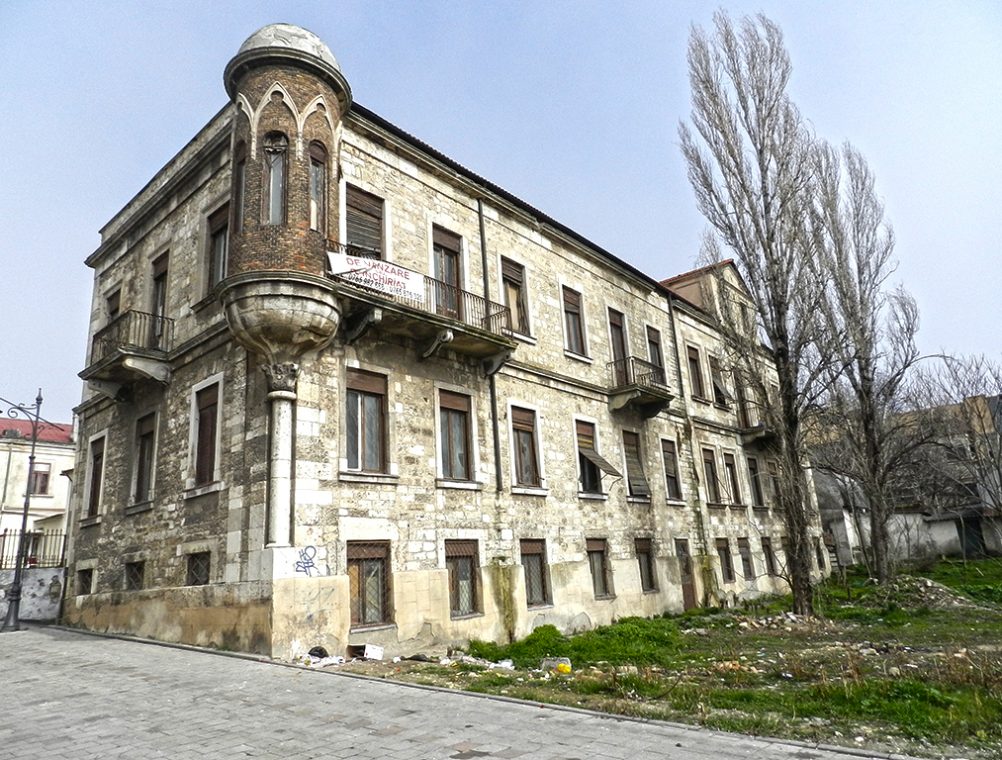
In the area, between 1881-1883, housing constructions with a significant architecture were built, according to the projects of the architect Pelopidas D. Couppa (the buildings located on the current CA Rosetti street no. 8 – English House (Alléon), consolidated and over-storeyed with the use of some pieces stone antiques, no. 7 – Stone House), the building on Traian street no. 15 (consolidation and expansion) and Hotel Gambetta (consolidation and expansion). In 1897, the construction of the building located on Alléon street no. 6 – Theodore Roussou House.
In the era, around Str. The English were concentrated in the Jewish quarter, as mentioned in the 1931 Monograph of col. MI Dobrogianu.
In the same period, the presence of the English street (then called English End or English Fund, today only an insignificant segment is preserved from it under the name Marinarilor End) starting from Comercială str. (current Petru Rareș str.) and parallel to St. Alléon (Str. CA Rosetti). At the time, the Jewish quarter was concentrated around Engleze Street, as mentioned in the 1931 Monograph of col. MI Dobrogianu.
In the area, between 1881-1883, housing constructions with a significant architecture were built, according to the projects of architect Pelopidas D. Couppa (the buildings located on the current str. CA Rosetti no. 8 – English House (Alléon), consolidated and raised with the use of some ancient stone pieces, no. 7 – Stone house), the building on Traian street no. 15 (consolidation and extension) and Hotel Gambetta (consolidation and extension), in 1897 the construction of the building located on Alléon street no. . 6 – House Theodore Roussou.